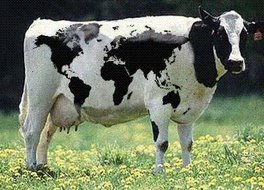
In a conversation with a friend (a chef) this weekend, he said "I think local is the new organic." I'd like to make sustainable the new local.
We're not as bad-off as Australia . . . yet. But we may be headed that way -- in my time in Kansas, I learned that the Ogallala aquifer (the source of water for all of Western Kansas, Nebraska, and Oklahoma and parts of Texas and Eastern Colorado) is expected to run dry in 5-15 years. I learned that people are shot over water theft in parts of Colorado. I got scared. Coming from a wet area, drought wasn't really a factor in my life -- we had dry summers, but nothing too bad. Of course, now my parents have to conserve their well water in drought conditions, but that means only watering part of the garden each day. Not no-water-in-the-ground.
So where does gourmet come in? Where do we get our beef? Our corn? Where do our beef get their corn? I'm not against having cattle on the western plains; in fact, I think they're the most sensible thing to have out there. Grazing. Not eating corn grown on land that can't support it. Grass-fed beef? Not tender enough, according to some, but better than turning Nebraska into a desert. It may be best to plan your cooking, even your gourmet cooking, around foods that could be here in a decade.
Tuesday, July 31, 2007


Why Africa fears western (noun)
This editorial seemed to me sad, but not unexpected. You see, we've been mishandling our PR in Africa ever since the West decided to go there. Not just our PR, but the African people -- when we focus on imposing our goals and expectations or ignoring African goals and expectations, we create animosity. When we hold positions of power, animosity becomes fear.
What we need is a giant PR campaign, continent-wide, explaining that we're trying to help. At the same time, we need to actually try to help. Otherwise, more people are going to be convicted of harming Africans deliberately.
What we need is a giant PR campaign, continent-wide, explaining that we're trying to help. At the same time, we need to actually try to help. Otherwise, more people are going to be convicted of harming Africans deliberately.
Monday, July 30, 2007
After long absence . . . debate!
I have been on a much-enjoyed vacation, but this article convinced me to come back to blogging (at least for now).
You see, with Farm Sanctuary being in Watkins Glen and my DVM alma mater being only 1 hour away, I treated some of these rescued animals as a vet student. They got extraordinary treatment -- months of PT for a calf, radiation therapy for a goat, exploratory surgery for a pig -- at extraordinary cost. People sponsored many of these animals, sending in money each month to ensure they never had to die without the finest of treatment. Many ran up bills in the thousands of dollars and up.
What are you people thinking????
For the money spent on cancer therapy for that goat, I'm guessing 20 families in Africa could have been provided with milk goats that would be loved, cared for, and given happy lives (while feeding the members of said families). For the surgery on the pig (which resulted in euthanasia due to an untreatable problem), 10 children in SE Asia could have been sent to school from the proceeds of a pig-raising operation. When did animals rank above humans?
I am concerned about animal welfare, and I believe the article makes some excellent points about the need to work together despite differences of philosophy, but I think groups like Farm Sanctuary have their priorities skewed.
This weekend, my parents and I had a goat roast for a group of my international friends. One member of the group who couldn't come emailed me, concerned about goat slaughter methods in Muslim communities. This is a reasonable concern (although proper halal slaughter is quite humane). My issue is with people who consider animals before people.
In my book, kids eat first.
You see, with Farm Sanctuary being in Watkins Glen and my DVM alma mater being only 1 hour away, I treated some of these rescued animals as a vet student. They got extraordinary treatment -- months of PT for a calf, radiation therapy for a goat, exploratory surgery for a pig -- at extraordinary cost. People sponsored many of these animals, sending in money each month to ensure they never had to die without the finest of treatment. Many ran up bills in the thousands of dollars and up.
What are you people thinking????
For the money spent on cancer therapy for that goat, I'm guessing 20 families in Africa could have been provided with milk goats that would be loved, cared for, and given happy lives (while feeding the members of said families). For the surgery on the pig (which resulted in euthanasia due to an untreatable problem), 10 children in SE Asia could have been sent to school from the proceeds of a pig-raising operation. When did animals rank above humans?
I am concerned about animal welfare, and I believe the article makes some excellent points about the need to work together despite differences of philosophy, but I think groups like Farm Sanctuary have their priorities skewed.
This weekend, my parents and I had a goat roast for a group of my international friends. One member of the group who couldn't come emailed me, concerned about goat slaughter methods in Muslim communities. This is a reasonable concern (although proper halal slaughter is quite humane). My issue is with people who consider animals before people.
In my book, kids eat first.
Thursday, May 31, 2007
A lack of courtesy
I'm not a lawyer (unlike the man involved), so I can't say it's illegal to fly commercially while knowing you have TB. It does show a lack of courtesy, though.
Every article I've seen mentions that the man knew he had TB when he left on his honeymoon. He didn't know it was XDR until he was already gone. Knowing that he had XDR-TB, he avoided federal officials who were attempting to get him safely home in order to sneak into the country himself.
What does it take to knowingly expose not only a large number of strangers, but also your new wife, to TB? How does a lawyer justify trying to hide his movements from government agents? I'm guessing a) he can afford to have the good stuff (like a long European honeymoon with at least 5 flights), so he's not used to being 'thwarted' or controlled in any way; b) he hasn't been taught to think about others if that will make life less than easy for him; c) he either never knew or has forgotten any basic health protocols (I wonder if he always washes his hands). In other words, he's self-centered and independent -- probably from my generation (Gen-X). Selfish.
Yes, the officials could have moved faster -- but I can't imagine how much louder the press would be if that had happened. Remember, he's a lawyer. You have to be very very cautious about how you treat lawyers. Many of them throw their figurative weight around to get their own way (not all, but you get conditioned; based on his behavior, I think Mr. TB would have been dangerous if detained without media outcry for it). I'm not really going to fault them. I fault him. He had no courtesy.
Every article I've seen mentions that the man knew he had TB when he left on his honeymoon. He didn't know it was XDR until he was already gone. Knowing that he had XDR-TB, he avoided federal officials who were attempting to get him safely home in order to sneak into the country himself.
What does it take to knowingly expose not only a large number of strangers, but also your new wife, to TB? How does a lawyer justify trying to hide his movements from government agents? I'm guessing a) he can afford to have the good stuff (like a long European honeymoon with at least 5 flights), so he's not used to being 'thwarted' or controlled in any way; b) he hasn't been taught to think about others if that will make life less than easy for him; c) he either never knew or has forgotten any basic health protocols (I wonder if he always washes his hands). In other words, he's self-centered and independent -- probably from my generation (Gen-X). Selfish.
Yes, the officials could have moved faster -- but I can't imagine how much louder the press would be if that had happened. Remember, he's a lawyer. You have to be very very cautious about how you treat lawyers. Many of them throw their figurative weight around to get their own way (not all, but you get conditioned; based on his behavior, I think Mr. TB would have been dangerous if detained without media outcry for it). I'm not really going to fault them. I fault him. He had no courtesy.
Sunday, May 27, 2007
Book Review: A Journal of the Plague Year
Okay, this is fiction. It doesn't feel like it, but it is. Really. Defoe was only a child during the plague. These are not his memoirs.
Still, he captures a few problems that will be experienced in such situations:
If you don't like epi, and you don't like old non-fiction (this doesn't read like fiction, I'm serious), then you won't enjoy this. It's a dry account of 'what happened' during the great London plague.
Still, he captures a few problems that will be experienced in such situations:
- if quarantine is forced on a population, they will do what they can to get out of it
- people will panic too much and too soon, but they will also recover from their fear too soon
- the poor suffer the most from epidemics because they have to work to eat
If you don't like epi, and you don't like old non-fiction (this doesn't read like fiction, I'm serious), then you won't enjoy this. It's a dry account of 'what happened' during the great London plague.
Wednesday, May 23, 2007
Regulations backlog
In the spirit of catching up, three articles to discuss about regulatory issues:
1) Well, Russia wants to join WTO, does it? And will slowly decrease tariffs . . . wait, aren't we supposed to NOT be protectionists in the WTO?
1) Well, Russia wants to join WTO, does it? And will slowly decrease tariffs . . . wait, aren't we supposed to NOT be protectionists in the WTO?
Russia to join WTO2) And now Australia joins the game. More incredibly expensive cloned animals to . . . uh . . . what is it we're doing with them, now? We're not eating them yet (and they cost too much to eat, anyways). I think this is more in the same line as above -- we want to do it because the other kids all did it!
By Tom Johnston on 4/9/2007 for Meatingplace.com
Russia will become a full-fledged member of the World Trade Organization by year's end, or by the beginning of 2008 at the latest, an official said Monday at the conference "Russia-WTO: Hopes and Strategic Opportunities" in Moscow.
Economic Development and Trade Minister German Gref said it's not a matter of when, but how. In other words, the negotiation of terms on which Russia would join WTO is the top priority.
Gref said the average weighted rate of customs duties on goods and services would be reduced from 12.9 percent to 11.5 percent toward the conclusion of the transitional period. For some goods, the transitional period will be as long as seven years.
Additionally, Gref said Russia would reserve the right to satisfactory quotas on beef, pork and poultry until 2009. The country would then begin negotiations on a future quota calculation formula.
Overall, the average weighted rate of customs duties on farm produce will be reduced from 22.6 percent to 18 percent over a period of three to five years, he said.
"The degree of protection will not worsen for any group of goods," Gref said.
Aussies deliver cloned beef cow3) No, we don't eat horses here. Not wild horses. Not domestic horses. That's cruel! Now go get me my burger and chicken fries! And pick up some Lamb and Rice dog food while you're out.
By Tom Johnston on 4/17/2007 for Meatingplace.com
Scientists on Tuesday announced they cloned a beef cow, the first of its kind in Australia.
Cloning "Mini," a Brahman cattle, cost her central Queensland-based owners about $30,000, media reports indicated.
Dr. Richard Fry of Clone International explained that the process is difficult, with a success rate of about 10 percent.
"There are problems with the genetics because if we don't completely rub off the memory of the cell that we've used, then you get the incorrect expression of genes," he told reporters. "You don't get embryo forming, and they won't result in pregnancy."
Chris Fenech of the Fenech Brahman Cattle company says "Mini" was cloned from one of his family's prized stud bulls.
Wild horses run free: House votes to ban their sale for commercial processing
By Ann Bagel Storck on 4/27/2007 for Meatingplace.com
The U.S. House of Representatives on Thursday voted to prevent the sale of free-roaming wild horses and burros for slaughter.
A 1971 law originally prevented the Bureau of Land Management from selling the animals for commercial processing, but in 2004, Sen. Conrad Burns (R-Mont.) inserted a measure in a spending bill allowing their sale.
About 29,000 wild horses and burros were roaming on public lands as of February, according to BLM, which wants the number at about 27,000 to 28,000.
The House voted last year and in 2005 to end the sale of the animals, but the Senate never took up the issue.
In related news, on Wednesday, the Senate Commerce, Science and Transportation Committee approved a bill that would outlaw horse slaughter across the nation.
Just too funny . . .
Ok, this is dogs and not in my line but (apologies to Sallie), pugs need a recall. Don't buy them. Please.
Tuesday, May 22, 2007
Higher education follows primary?
I was interested by this article because I've visited Cheikh Anta Diop. In fact, I have a friend who is a professor there. They aren't kidding -- the vet school (one of the few, if not the only, in W. Africa) is in good shape for them, but there isn't much there. Their entire lab space is about the size of the gross anatomy labs at any school here. They don't have a clinic to practice in. It's not where you'd want to be training the front line against avian influenza, rinderpest, and other diseases that could devastate our economies if they surged.
Why should we care? Besides the large proportion of grad students coming into this country from Africa (who need to know things they might not learn there), we benefit from their improved education by not having to pay Western researchers to do the needed field trials for African problems. They work cheaper even when they have the education, so we can put more development money into the infrastructure and project funds, less into the staff salaries.
I've been given this incredible blessing of attending good colleges and universities. One day, I may even leave them; for now, I'd just like to share that opportunity with people who've worked much harder to get much less.
Why should we care? Besides the large proportion of grad students coming into this country from Africa (who need to know things they might not learn there), we benefit from their improved education by not having to pay Western researchers to do the needed field trials for African problems. They work cheaper even when they have the education, so we can put more development money into the infrastructure and project funds, less into the staff salaries.
I've been given this incredible blessing of attending good colleges and universities. One day, I may even leave them; for now, I'd just like to share that opportunity with people who've worked much harder to get much less.
Monday, May 21, 2007
Makes me feel guilty for not practicing
It's starting to become news outside of the AVMA:
What do we do about it? Recruit. Maintain. Encourage. Fund. The program that APHIS is referring to does not select for food animal interest, but general interest, and I'm sure plenty of the attendees are not food animal-minded. How about a program that provides a good scholarship to one or two farm animal students at each vet school every year? That might be a little more efficacious. Money does talk.
Farm animal vet shortage prompts fears of disease outbreaksI disagree with their explanation for the reason, though. Although some may choose to switch to small animal for the money, it's more likely for the ability to not get beat up on the job -- large animal vets don't have an easy life, physically. The biggest reason, though, is that relatively more people are applying to vet school with NO large animal experience and no desire to work in rural areas with food animals. Therefore, we're admitting more small animal-minded people and they're not being convinced to change their plans. Why would they be? The curriculum in vet school is becoming more focused on the interests of the majority, which means the food animal subjects getting squeezed out for topics like oncology (a required course and rotation at Cornell now, but happily not until I left).
By Ann Bagel Storck on 5/1/2007 for Meatingplace.com
Surveys by the American Veterinary Medical Association indicate a shortage of farm animal veterinarians, which the organization fears could lead to disease outbreaks.
Although AVMA estimates the shortage at only 4 percent, that doesn't necessarily mean the situation isn't critical. "It's not like the other 96 percent can pick up the slack," Dr. Lyle Vogel, director of AVMA's animal welfare division, told the Associated Press. "Because of the distances and workload of the remaining veterinarians, they just can't fill in that shortage."
AVMA's findings echo those of another study conducted last year. (See Vet shortage could threaten food security, Meatingplace.com, June 2, 2006.) The shortage could be due to a large number of veterinary school graduates choosing to pursue small animal medicine with its perceived regular hours and better pay.
In response to the shortage, the National Academy of Sciences in March started an 18-month study to find gaps in veterinary care and look for ways to coordinate resources to fill them. USDA's Animal and Plant Health Inspection Service also has launched a pilot program that admits one student from each of the nation's 28 veterinary schools to a course focused on handling emergency disease outbreaks.
What do we do about it? Recruit. Maintain. Encourage. Fund. The program that APHIS is referring to does not select for food animal interest, but general interest, and I'm sure plenty of the attendees are not food animal-minded. How about a program that provides a good scholarship to one or two farm animal students at each vet school every year? That might be a little more efficacious. Money does talk.
What's the WHO been doing?
While I've been slaving away at my thesis, the WHO has done some interesting things with regards to avian influenza (bird flu, for those of you relying on the general news media). First, promising vaccine to low-income countries:
You probably haven't read anything in the news about H5N1 in a while. It's not gone. It's just not going anywhere.
WHO pledges AI vaccine stockpile for poor countriesI didn't know we had a good vaccine developed yet, but if we do . . . of course, they should be distributed to where they'll be the most efficacious -- wherever the disease occurs! Why not, if we're doing a centralized production, do a centralized distribution based on actual risk analyses? Oh, right, that would be using science to make decisions. We generally prefer economics or politics, which leads me to the second issue:
By Tom Johnston on 4/9/2007 for Meatingplace.com
Following calls from developing nations to more fairly distribute avian influenza vaccines, the World Health Organization said it will establish a global stockpile of vaccines for poor countries.
WHO director general Margaret Chan, who recently visited Indonesia, said the vaccine reserve would be critical for helping developing countries battle bird flu, the Jakarta Post reported.
Chan met with Indonesia President Susilo Bambang Yudhoyono recently to discuss worldwide vaccine production, some of which depends on virus sample supply from Indonesia.
"We will look at how to develop global stockpiles of vaccines, particularly for developing countries," Chan said, noting that WHO would gather resources from affluent countries, donors and large pharmaceutical companies.
Chan also noted that developing nations will have to fully cooperate in the world's fight against avian influenza. "The sharing of information on the virus is a requirement for all countries under an international health regulation which will come into effect June 15," she said.
WHO presses China for human AI samplesThey share that there are 5 cases, plus an old one they didn't mention, but they refuse to share the samples. Who actually believes there were only 5 cases? And that the samples of any or all of the cases will be shared just by asking? Sometimes, though, I think China obfuscates for the sake of having a secret. They don't lose anything by sharing samples except their scientists having sole access to a set of samples that probably aren't special enough to give them an edge in publishing etc. By sharing those samples, they would get the free benefit of the WHO's expertise. Not even free -- they've already paid for it by supporting the WHO as a member nation!
By Alicia Karapetian on 4/18/2007 for Meatingplace.com
China has not shared human samples of highly pathogenic avian influenza in a year, the World Health Organization said on Wednesday.
WHO officials contend that the lack of access to samples could hinder efforts to combat the disease, the Associated Press reported.
"Since [samples were last shared] there have been five H5N1 cases in China, plus a Beijing 2003 case reported in 2006," WHO Spokesman Joanna Brent told AP.
WHO hopes to receive two samples from the five recent victims in addition to the 2003 case.
You probably haven't read anything in the news about H5N1 in a while. It's not gone. It's just not going anywhere.
I've been away a while . . .
Yes, I've been just a bit busy with my thesis. I'll try to catch up; many news stories I've meant to share and discuss.
Friday, April 06, 2007
Hunger: the end
What does one write on Good Friday, when one has spent the last 40 days writing about hunger? When one has gone grocery shopping this afternoon, buying luxuries against the end of the Lenten discipline? When one has never truly felt hunger, despite that discipline, and despite knowing those who have?
I don't know what to write. I am blessed, as, I imagine, are you, to have eaten my fill many times, to have education and opportunities, to speak and write and read on issues that interest me. The tragedy of hunger is that it walks hand in hand with the lack of all those things. Hunger travels with ignorance, with oppression, because it feeds from them. Hunger lives with those who were not given a chance far more often than those who were.
The truth is, I can't really add anything to what I've written before. I've explained my take on the hunger situation and some possible solutions. If you want to learn more, I've suggested some resources. For now, I'll just ask: please, do something.
I don't know what to write. I am blessed, as, I imagine, are you, to have eaten my fill many times, to have education and opportunities, to speak and write and read on issues that interest me. The tragedy of hunger is that it walks hand in hand with the lack of all those things. Hunger travels with ignorance, with oppression, because it feeds from them. Hunger lives with those who were not given a chance far more often than those who were.
The truth is, I can't really add anything to what I've written before. I've explained my take on the hunger situation and some possible solutions. If you want to learn more, I've suggested some resources. For now, I'll just ask: please, do something.
Thursday, April 05, 2007
Hunger: malnutrition in the midst of plenty
This may not seem like an issue to attack in a post on hunger, but I think it is vital for domestic issues of hunger: the poor are not just going hungry, they're being malnourished.
Undernourished and malnourished are different things. Undernourished is a lack of calories. Malnourished is the wrong calories, or the wrong balance of nutrients.
Our children in poor communities are being malnourished, in part, because healthy food isn't available. If you aren't in a suburb with a car to get to the big supermarket, your access to fresh produce and non-packaged food is limited. In the country, of course, you can grow your own. In the city, many people are left with just the corner convenience store. How healthy can it be to eat every meal out of convenience store choices? Not to mention expensive . . .
Add to this the ubiquitous cheap fast food with low nutritional value to match the low price, and the poor choices available in many school cafeterias, and the parents who don't know how to cook from basic ingredients . . . you get poverty leading to malnourishment, with or without undernourishment. NYC is doing something about this. It might be a good idea for other cities to consider similar actions.
Until then, let's push for farmer's markets and neighborhood grocery stores, for healthy school lunches and nutritional training as part of development strategies. That may help end one of the less visible hunger effects of poverty.
Undernourished and malnourished are different things. Undernourished is a lack of calories. Malnourished is the wrong calories, or the wrong balance of nutrients.
Our children in poor communities are being malnourished, in part, because healthy food isn't available. If you aren't in a suburb with a car to get to the big supermarket, your access to fresh produce and non-packaged food is limited. In the country, of course, you can grow your own. In the city, many people are left with just the corner convenience store. How healthy can it be to eat every meal out of convenience store choices? Not to mention expensive . . .
Add to this the ubiquitous cheap fast food with low nutritional value to match the low price, and the poor choices available in many school cafeterias, and the parents who don't know how to cook from basic ingredients . . . you get poverty leading to malnourishment, with or without undernourishment. NYC is doing something about this. It might be a good idea for other cities to consider similar actions.
Until then, let's push for farmer's markets and neighborhood grocery stores, for healthy school lunches and nutritional training as part of development strategies. That may help end one of the less visible hunger effects of poverty.
Wednesday, April 04, 2007
Hunger: breaking out of apathy
Well, I could use a little of this for my work right now, but maybe we'll tackle the problem of world-hunger-apathy.
Why does it exist? Maybe I'm feeling a little pessimistic, but I think it has to do with our basic selfishness. If we personally are not hungry, why would we care about hunger? That's the idea of the hunger banquets and educational/short-term mission trips: letting people actually experience the feeling. That can help break apathetic cycles.
Maybe the distance is also related; most of us don't live near the hungry, so it seems less important than the things we see every day. There, again, the short trips to areas that experience hunger can help close the distance. Also, volunteering with organizations that work directly with the hungry could help increase your feelings for local hunger issues.
Mostly, though, we have to make the decision to care. I guess that's my theme this week: the choice is individual and personal. Then we can start trying to shock ourselves into doing something.
Why does it exist? Maybe I'm feeling a little pessimistic, but I think it has to do with our basic selfishness. If we personally are not hungry, why would we care about hunger? That's the idea of the hunger banquets and educational/short-term mission trips: letting people actually experience the feeling. That can help break apathetic cycles.
Maybe the distance is also related; most of us don't live near the hungry, so it seems less important than the things we see every day. There, again, the short trips to areas that experience hunger can help close the distance. Also, volunteering with organizations that work directly with the hungry could help increase your feelings for local hunger issues.
Mostly, though, we have to make the decision to care. I guess that's my theme this week: the choice is individual and personal. Then we can start trying to shock ourselves into doing something.
Tuesday, April 03, 2007
Hunger: Stewardship
I've written in the past about accountability, but a meeting/speaker I went to tonight got me interested in writing about stewardship. They're similar things, but while accountability means reporting to an outside agency, stewardship means reporting to yourself and God.
If we were perfect stewards, would there be hunger in the world? I don't think so, but I could be wrong. I feel that perfect stewardship would entail us giving the extra that we don't need to someone who could use it to its full potential (on a personal or national or international level, same concept). Then again, unless perfect stewardship from us was matched by perfect stewardship by everyone else, some people would waste what they had and people would go hungry by result, whether the waste happened in someone's excessive possessions or someone else's minimal possessions. In other words, we can't end hunger by perfecting the use of our own resources.
We could end hunger if we got the entire world to steward their resources perfectly. That's the idea behind socialism, right? Everyone has a certain amount of things to which they are entitled, and those that have extra will have to give it up to those who have not enough. Socialist governments take this principle and mandate it, but I'm not sure that works right (unless the nation in question has a Scandinavian work ethic, so people work even though they will get the same financial benefits from laziness). I think, in the end, that people have to choose stewardship for themselves.
That leaves us with only one acting point: convincing people to be good stewards. I guess that's what I've been trying to do here, these 40 days, by showing how and why. You have to make the decision, though.
Please?
If we were perfect stewards, would there be hunger in the world? I don't think so, but I could be wrong. I feel that perfect stewardship would entail us giving the extra that we don't need to someone who could use it to its full potential (on a personal or national or international level, same concept). Then again, unless perfect stewardship from us was matched by perfect stewardship by everyone else, some people would waste what they had and people would go hungry by result, whether the waste happened in someone's excessive possessions or someone else's minimal possessions. In other words, we can't end hunger by perfecting the use of our own resources.
We could end hunger if we got the entire world to steward their resources perfectly. That's the idea behind socialism, right? Everyone has a certain amount of things to which they are entitled, and those that have extra will have to give it up to those who have not enough. Socialist governments take this principle and mandate it, but I'm not sure that works right (unless the nation in question has a Scandinavian work ethic, so people work even though they will get the same financial benefits from laziness). I think, in the end, that people have to choose stewardship for themselves.
That leaves us with only one acting point: convincing people to be good stewards. I guess that's what I've been trying to do here, these 40 days, by showing how and why. You have to make the decision, though.
Please?
Monday, April 02, 2007
Hunger: why?
I admit, I'm out of ideas. This has happened on occasion in the last 35 days, but inspiration generally struck. Today -- nothing.
So maybe I'll talk about why hunger exists. Except, of course, that I don't really know. I can spout off arguments: distribution problems, inequity, greed, misunderstanding, drought, disease, the list goes on. But none of these are core reasons.
I think all of this stems from living in a fallen world. I'm not going to get too deep into theology, but everyone should be able to agree that this world and the people in it are not inherently good in the sense that we think of good. The world is good, but not good, if you know what I mean. We think good means good-to-us, when it actually means good-for-us. Big difference.
People are not good, deep down, in any sense of the word. We all have feelings that we refer to as base, base instincts and base emotions. Ever wonder why we use that term in the connotation of bad? We sense that we are imperfect, flawed creatures at heart.
So hunger exists. Some people live in plenty while others suffer in need. Thus it was and ever shall be. That doesn't mean we shouldn't do something about it, just that we need to know that we can't ever completely fix it. I joke that my career goal is to end world hunger, but I have to admit that making a small dent is all I can reasonably hope for.
But that small dent is worth it.
So maybe I'll talk about why hunger exists. Except, of course, that I don't really know. I can spout off arguments: distribution problems, inequity, greed, misunderstanding, drought, disease, the list goes on. But none of these are core reasons.
I think all of this stems from living in a fallen world. I'm not going to get too deep into theology, but everyone should be able to agree that this world and the people in it are not inherently good in the sense that we think of good. The world is good, but not good, if you know what I mean. We think good means good-to-us, when it actually means good-for-us. Big difference.
People are not good, deep down, in any sense of the word. We all have feelings that we refer to as base, base instincts and base emotions. Ever wonder why we use that term in the connotation of bad? We sense that we are imperfect, flawed creatures at heart.
So hunger exists. Some people live in plenty while others suffer in need. Thus it was and ever shall be. That doesn't mean we shouldn't do something about it, just that we need to know that we can't ever completely fix it. I joke that my career goal is to end world hunger, but I have to admit that making a small dent is all I can reasonably hope for.
But that small dent is worth it.
Sunday, April 01, 2007
Hunger: participation
If you couldn't tell in my earlier posts, I consider participation to be crucial in any development plan. In particular, participation from the people who are going to benefit. It's good to have the local, regional, and national governments involved, it's nice to have the help of other agencies in the area and in the field, but it's absolutely crucial to have the input, agreement, and active participation of the people you're trying to help.
Otherwise, you do dumb things, spending lots of money on projects that everyone will ignore. Examples I've been told: irrigation projects with pipes that no one knows how to fix (it breaks, it's useless), training in modern surgery techniques (castration, in the case I heard of) when the supplies in the area are limited (a rope and a knife), providing improved chickens when people don't like the taste of birds with white feathers.
How do you get participation? Start at the beginning: do a needs assessment. The best way I've heard of to do that is the bean method. Draw up a list of projects your organization would be willing to work on. Have a big meeting in the community, with all the people who might possibly be involved there (you might think that would be difficult, but in my experience people will drop everything for a meeting, especially if the elders get to make speeches). Explain the different projects: who would be involved, what they would entail, what the benefits might be. Put a symbol on the ground to represent each project (i.e. a hammer for a building project). Give every person in attendance a number of dried beans (10 may be best). Tell them to put as many beans as they want in a pile in front of the projects they most like, with more going to the better projects and none to the worst. That way, the people vote, anonymously, with the understanding that people may want more than one of your options. The projects with the most beans in their piles win your support.
Once you've chosen a project, work with the community leaders. Make sure that people in the community support your project in action, not just words: find volunteers to help or hire locals to do some of the work. Teach people as you go the basics of repair, continuation, whatever is appropriate. Invite the elders to your meetings, at least before making any major decisions. You should spend as much time on teaching as on your 'official' job.
Above all, you are not an expert in their way of life. They are. Listen to them, learn from them, and make no assumptions about them.
Otherwise, you do dumb things, spending lots of money on projects that everyone will ignore. Examples I've been told: irrigation projects with pipes that no one knows how to fix (it breaks, it's useless), training in modern surgery techniques (castration, in the case I heard of) when the supplies in the area are limited (a rope and a knife), providing improved chickens when people don't like the taste of birds with white feathers.
How do you get participation? Start at the beginning: do a needs assessment. The best way I've heard of to do that is the bean method. Draw up a list of projects your organization would be willing to work on. Have a big meeting in the community, with all the people who might possibly be involved there (you might think that would be difficult, but in my experience people will drop everything for a meeting, especially if the elders get to make speeches). Explain the different projects: who would be involved, what they would entail, what the benefits might be. Put a symbol on the ground to represent each project (i.e. a hammer for a building project). Give every person in attendance a number of dried beans (10 may be best). Tell them to put as many beans as they want in a pile in front of the projects they most like, with more going to the better projects and none to the worst. That way, the people vote, anonymously, with the understanding that people may want more than one of your options. The projects with the most beans in their piles win your support.
Once you've chosen a project, work with the community leaders. Make sure that people in the community support your project in action, not just words: find volunteers to help or hire locals to do some of the work. Teach people as you go the basics of repair, continuation, whatever is appropriate. Invite the elders to your meetings, at least before making any major decisions. You should spend as much time on teaching as on your 'official' job.
Above all, you are not an expert in their way of life. They are. Listen to them, learn from them, and make no assumptions about them.
Friday, March 30, 2007
Hunger: more alternative(s)
No post yesterday: the nicer the hotels, the less is free. I wasn't going to pay 10 dollars to spend an hour of my sleeping time online, sorry.
What else can we do about hunger, besides giving food?
Education is the key, really, to improving lives in the long run. The old saw is that if you give a man a fish, you feed him for a day, if you teach him to fish, you feed him for life. Well, if you teach him aquaculture techniques, you feed his country for even longer.
Not just agricultural education, though. For many people in places where hunger strikes on a regular basis, their only capital is themselves. They have no savings, no valuables, little to no land: no real assets. But they have themselves. Most of the time, that means they have a body that is used to hard work, which they can rent to people. Wouldn't it be better to provide them with a strong mind, capable of higher-level, better-paying jobs, to accompany that body? With education, Bangalore has gone from low-income to IT center to the world. Despite an agricultural history, they have developed a way to feed their people through non-agricultural jobs.
Ag education does have its place in the grand education scheme. In countries currently relying on ag production, schools and universities should try to develop a strong extension and research service in each of their production zones or regions. This requires a good training program for scientists and extension specialists, preferably to return to their home regions and work in cooperation with the local farmers.
All of this requires a good primary and secondary school system feeding into upper-level training. I cannot stress enough the necessity of universal primary education. It may not put food in stomachs today, but it will do more in the long run than we ever can with free corn.
What else can we do about hunger, besides giving food?
Education is the key, really, to improving lives in the long run. The old saw is that if you give a man a fish, you feed him for a day, if you teach him to fish, you feed him for life. Well, if you teach him aquaculture techniques, you feed his country for even longer.
Not just agricultural education, though. For many people in places where hunger strikes on a regular basis, their only capital is themselves. They have no savings, no valuables, little to no land: no real assets. But they have themselves. Most of the time, that means they have a body that is used to hard work, which they can rent to people. Wouldn't it be better to provide them with a strong mind, capable of higher-level, better-paying jobs, to accompany that body? With education, Bangalore has gone from low-income to IT center to the world. Despite an agricultural history, they have developed a way to feed their people through non-agricultural jobs.
Ag education does have its place in the grand education scheme. In countries currently relying on ag production, schools and universities should try to develop a strong extension and research service in each of their production zones or regions. This requires a good training program for scientists and extension specialists, preferably to return to their home regions and work in cooperation with the local farmers.
All of this requires a good primary and secondary school system feeding into upper-level training. I cannot stress enough the necessity of universal primary education. It may not put food in stomachs today, but it will do more in the long run than we ever can with free corn.
Wednesday, March 28, 2007
Hunger: alternatives
Since I spent yesterday's post talking about not giving food away, what are our alternatives? I mentioned food for work programs, but there are other choices:
- fund programs to improve genetics and techniques in local agriculture
- improve transportation infrastructure from farms to hungry people
- decrease post-harvest losses with improved storage facilities
- increase local industry (this improves wages, which increases the amount people can spend on food)
Pregnancy and beef?
This is ridiculous. How many possible sources of bias are there in this study? Looking at the diets of women when they were pregnant long enough ago that they are now grandmothers!?!? And assuming that the current levels of hormones in beef were present then. And that no other possible sources of anything that would affect development might have been present. And that the women even remember accurately how much beef they ate. Bad epi!
Study links beef-eating moms to sons with low sperm counts; AMI objects By Ann Bagel Storck on 3/28/2007 for Meatingplace.com Men whose mothers ate a lot of beef during pregnancy are more likely to have low sperm counts and fertility problems, according to a report in the journal Human Reproduction.
Dr. Shanna H. Swan of the University of Rochester Medical Center, the report's author, identified anabolic steroids used to fatten cattle, pesticides and other environmental contaminants as possible causes of the problems.
Swan and her colleagues studied 387 partners of pregnant women in five U.S. cities. Each man provided a sperm sample, and his mother completed a questionnaire about what she ate during her pregnancy. On average, the mothers reported eating beef about 4.5 times weekly and other meats less frequently.
For women who ate beef at least seven times a week, the son's sperm averaged 24.3 percent below normal. Although those sons did produce a pregnancy, they were three times as likely to have consulted a fertility doctor.
AMI's criticism
The American Meat Institute advised that the study be viewed with "a giant dose of skepticism." Its most glaring fault, AMI said, was its "purely speculative conclusion" that chemical components in the beef were linked to the fertility problems.
"The study does not include any laboratory analysis of the compounds suggested to be contained in beef, much less the beef that may have been consumed by the mothers decades ago," said Randy Huffman, AMI Foundation vice president of scientific affairs.
AMI also criticized the validity of women "of advanced age" recalling what they ate decades ago. Swan conceded that women may have difficulty remembering their diets after such a passage of time, but added, "When you are pregnant, you are very aware of what you eat."
Swan also emphasized that the study needs to be confirmed, and it is too soon to recommend that pregnant women avoid eating beef.
Subscribe to:
Posts (Atom)