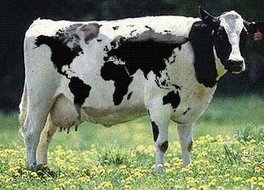
A wonderful resource for more information on world hunger is available here.
There really are a lot of NGOs (non-governmental organizations) working on the hunger issue. They work on nutrition, food aid, food security, agricultural research. They provide hand-outs, hand-ups, participatory research, moral support. They do good work.
Why so many? Well, there are a lot of things to focus on, so it's a good idea to have multiple NGOs working on different issues, right? I don't think so. The various issues are all linked. For example, food prices in Uganda are going up and that's pushing some Ugandans into food insecurity. Why? Because money is pouring into Darfur to feed the hungry, and Sudan isn't producing enough food. The money some NGOs are sending to Darfur is making things harder for other NGOs in Uganda. Wouldn't cooperation be a good idea?
But is the UN (the ultimate in multiple-group cooperation, although not technically an NGO) the answer? Well, that would require the departments within the UN to talk 1) to each other and 2) to other groups. From what I've seen (and I'm young and naive, so I may not have seen this right), the UN departments don't like to communicate outside their own world.
So what is the answer? Well, the HungerWeb is a good start. Start an NGO just to run communications with other NGOs. Get people talking to each other. Know what people are doing where, how it's working (a topic for later), and how it impacts your project.
Until then, have fun searching the double-digit number of free job boards for a specific position. Enjoy observing that the number of people needed in offices is greater than the number of people needed in the field. Streamlining . . .
Friday, February 23, 2007


Thursday, February 22, 2007
Beware the methane
Well, the FAO isn't necessarily biased towards animal agriculture, is it? I wonder which is the bigger worry: the places where people keep livestock on pasture from cultural traditions, or the places where people keep livestock on corn in order to save people money? And is eating meat worse than driving in an SUV with no passengers?
Hunger: overexposure
Appropriately enough, today, when I planned to start blogging seriously about the problem of hunger in the world, NPR's Morning Edition did a story on the retiring head of the UN's World Food Program (WFP).
The theme of the interview, it seems to me, is overexposure. Not of the American people; most really don't know all that much about world hunger. No, it's the people working on hunger who become overexposed. They lose one of two things: 1) their ability to be rational about the situation or 2) their ability to feel for the people they're trying to help. James Morris seems to have been fighting the second, but lost out to the lure of statistics. If I just throw enough statistics at it, people will come to grips with the fact that we have a problem, right?
The statistics are overwhelming. Except that the idea of 18,000 children dying is a little abstract for most Americans. We can understand the child next door dying of cancer, 3 children in a fire, the 13 people killed at Columbine. We can't really conceive of 18,000 children dying
every day. Most Americans, too, have never seen someone die of hunger, so they don't know what it entails. (Side note: the angriest I've ever been with an author was when I read that abortion was a more pressing legislative issue because all the children dying of hunger could hang on one day; after all, abortion is immediate and hunger is slow. This from a doctor.)
So, statistics don't really work because we don't understand them. What would? Americans are underexposed as far as world hunger. The people who know about it are overexposed. Suggestions?
Wednesday, February 21, 2007
The Lenten Theme: Hunger
I wanted to keep up the daily posts, as much as possible. I know it's good for me to come here and write something every day. So, for Lent, I'm committing to write something every day (except Sundays).
As the rest of my Lenten discipline is related to world hunger, I'll be writing on the theme of hunger, organizations involved in it, misconceptions about it, and anything that comes up. I'll probably stick to a theme for each week, to be decided as they come.
Today's comment: fasting makes concentration difficult. I know I've seen the stories about children having trouble focusing in school because of hunger, but I had never really experienced it while fasting before. Today, without changing my routine, I decided to fast. At 2:30, I gave in and ate some bread to avoid becoming sick (which may have something to do with the anti-malarial I took at 1). I was unable to concentrate on anything from 10 on. I couldn't work. Even after the bread, I spent 20-30 minutes sitting on my couch, staring blankly. I know, too, that my fast, only meant to be 24 hours or less, is nothing compared to the constant hunger felt by many. I think the hunger itself may be preventing improvement in their situation.
Tuesday, February 20, 2007
Today's photo theme: sunrise, sunset
Well, appropriately enough for my last daily posting of Uganda photos, the dramatic skies of Karamoja. People in Kansas talk about claustrophobia in NY because they can't see the sky, whereas I feel more agoraphobia here. In Karamoja, though, the mixture of clouds and sun make the sky an interesting study for anyone.
 Here, Venus makes an appearance (the slightly blurred light to the left of the tree) as we prepared to leave for the day. Earlier, we could see the Milky Way, the Southern Cross, and many other constellations. Hooray for a night sky hundreds of miles from streetlights!

 Here, Venus makes an appearance (the slightly blurred light to the left of the tree) as we prepared to leave for the day. Earlier, we could see the Milky Way, the Southern Cross, and many other constellations. Hooray for a night sky hundreds of miles from streetlights!
And, in case you were curious, here's what I look like with a monkey on my back.

And, as I mentioned to Dad, the (artificially) zebra-striped bulls. These animals are silver-gray; traditionally, the last animal in a bride-price will be this color and will be given zebra stripes with a branding iron (as seen here).

And, as I mentioned to Dad, the (artificially) zebra-striped bulls. These animals are silver-gray; traditionally, the last animal in a bride-price will be this color and will be given zebra stripes with a branding iron (as seen here).

Monday, February 19, 2007
Today's photo theme: plant life

I'm going to stop these daily posts tomorrow. First, I'm running out of good pictures to post. Second, I'm going to do something else for Lent. I'm not sure what yet, but something . . .
Anyways, here's an acacia tree beauty shot, sitting next to a washed out ravine (washed out by the daily rains we had our second week). As usual, more on flickr.
Playing hunches? Or playing innumerate?
In case you don't know, I'm a grad student in epidemiology. My current class in my major area, Design and Analysis of Studies in Epidemiology, started off with discussions and readings on causation, bias, and confounding. And then I read this.
From the title and introduction, I was quite positive; it seemed the author was going to extol the virtues of evidence-based medicine, which (in my opinion) is irretrievably linked to epidemiology. It is the reason we want to apply statistics to health data. It is the best way (again, in my opinion) to choose public health plans that maximize the return on our dollar.
But people not drinking the evidence-based Kool-Aid seem to worry a lot about the ecological fallacy. That's what happens when group data is inappropriately applied to individuals. That's why people thought that it was wrong for a doctor not to order what he thought was an inappropriate test, although the person in question later developed the disease in question.
Too often, however, these people fall prey to the atomistic fallacy. That's what happens when individual data is inappropriately applied to groups. That's why the jury awarding a settlement in the above case was acting more with indignation than sense in second-guessing the doctor and his education.
What's my problem here? Well, I never heard of the atomistic fallacy, in exact or inexact terms, until I did the reading for my class last week. You may have noticed that I do quite a bit of reading on my field. Does that seem odd? I've heard lots about the ecologic fallacy, although never with that term attached, but never anything about an atomistic fallacy. I think that is because of a general atomistic leaning in science and medicine. I've been hearing about (and experiencing) the bias towards bench science since I became interested in epidemiology. What we do, playing with numbers, is not real science in the eyes of many of our colleagues. Of course they would caution against our findings, if they don't trust our methods. But why would they talk about the atomistic fallacy? Their source of funding is reliant on individual, atomistic findings having an effect on a grand level.
That's what most of this comes down to: funding. Researchers competing for funding need to make their research sound applicable. The dominant paradigm is atomistic, so ecological issues are held up for extra scrutiny. And evidence-based medicine, as opposed to "the art of medicine", is considered just as suspect.
Truth is, evidence-based medicine is as much of an art as the old-school anecdotal medicine. The problem is that the art is now based in math and statistics, not hunches. And people going to med (and vet) school don't generally like math and statistics. People in the general public don't generally like math and statistics. Nobody likes art in a medium they don't like.
Saturday, February 17, 2007
Today's photo theme: pathologies!
 Ok, today is not for the faint of heart. Here's nothing exotic, really, just a big abscess. Many good abbatoir etc. photos will be going up on flickr soon.

Friday, February 16, 2007
What is food?
Well, Josh was right -- this guy sounds like me!
Here's my plea: teach your children how to cook from scratch. If you don't know yourself, get them classes with someone who does. Ask grandparents. But raise them cooking, please!
Eat food. Not too much. Mostly plants.That, right there, will answer any nutrition questions we seem to come across these days. Problem is, nobody knows how to cook that food anymore.
Here's my plea: teach your children how to cook from scratch. If you don't know yourself, get them classes with someone who does. Ask grandparents. But raise them cooking, please!
Who's in charge here?
Yes, we really do have a screwed-up food safety program. One of the other things we need to start thinking about: the lack of food animal vets. These include the vets who are doing food inspection, who are working between the food safety program and the producers to improve food safety 'farm to fork'. Would consolidation help? I don't know, but it would make it a little bit easier to understand who's in charge.U.S. Sen. Dick Durbin (D-Ill.) and Rep. Rosa DeLauro (D-Conn.) have re-introduced in Congress a bill that would consolidate into a single food-safety agency the 15 separate federal branches currently charged with protecting the country's food supply.
Senators pitch Safe Food Act again By Tom Johnston on 2/16/2007 for Meatingplace.com
The two Congress members are pushing for new hearings on the Safe Food Act, a bill they have tried to enact for more than 10 years. They re-introduced it simultaneously in both chambers of Congress.
"From the E. coli outbreak that pulled spinach off store shelves to the Taco Bell outbreak that sickened individuals, it is clear that our food safety structure is collapsing and endangering public health," DeLauro said.
The law would hatch a new agency, named the Food Safety Administration, which would carry out the regular, random inspection of all food processing plants, the increased oversight of imported foods, and the adoption of more stringent standards for tracing foods to their point of origin.
Lawmakers are hoping such a consolidation would eliminate the bureaucratic confusion caused by the existing setup, a network in which, for example, the Food and Drug Administration oversees frozen cheese pizza, while USDA presides over frozen pepperoni pizza. The 15 distinct agencies collectively administer at least 30 laws.
"Our current food safety system has turned into a food fight among dozens of federal agencies," Durbin said. He and DeLauro note that their position is supported by the Government Accountability Office's recent placement of food safety on its list of critically flawed federal programs.
One of the perceived hurdles to creating a mega food-safety agency is the cost. And Kate Cyrul, spokeswoman for DeLauro, told Meatingplace.com, "I don't know if [cost] has been scored."
Today's photo theme: the markets

The clothing salesmen who sold us some blankets in Kangole on market day. The boys to the left are selling brooms -- no stick, just the bristles.
Thursday, February 15, 2007
Today's photo theme: the men
I said I wouldn't change a post, but I have: the essay regarding our work in Uganda has been updated and improved by suggestions, some from comments (thank you, I appreciate the correction).
And today's photos: the men of Karamoja. Here, one is butchering a goat for our welcome party.
And today's photos: the men of Karamoja. Here, one is butchering a goat for our welcome party.

Wednesday, February 14, 2007
Today's photo theme: cows (of course!)
 Calves running joyfully towards the cows, who were returning for our testing procedures, while one of the herd boys tries to keep them back.
Tuesday, February 13, 2007
Today's photo theme: Mother and child
 Okay, the photos on flickr are of human mothers with their children, but I liked this one, too!
Monday, February 12, 2007
What I did in Uganda
Zoonotic Disease Survey in Karamoja, Uganda
Background
In January-February 2007, a team of volunteers from the Kansas State University (KSU) branch of Christian Veterinary Missions (CVM) traveled to
The purpose of this project was to initiate a zoonotic disease survey. Zoonotic diseases, while important in high income countries (HIC), become critical in low income countries (LIC). In LIC’s, direct contact with livestock is more common and basic hygiene is less common (and less possible) than in HIC’s. In HIC’s, zoonotic disease surveys and control are often in the hands of the government, as, for example, in the USDA’s brucellosis control programs. In LIC’s, however, the government is unable or unwilling to pay for such expensive programs; the livestock production systems are also too decentralized for such a top-down approach. This leaves the livestock keepers of these countries to rely on private laboratories (which are too costly for subsistence farmers) or development programs for identification of zoonotic diseases in their animals. It is such a development program, Cooperative Livestock Integration and Development Enterprise (CLIDE), with which this survey is being performed, in collaboration with the Italian Cooperation and Development program (CD).
Karamoja is a semi-arid region in the northeast area of 
 In the dry season, the manure pack of the corrals is also aerosolized and carried in the strong winds, spreading throughout the manyatta. The lack of readily-accessible water also makes hygeine difficult; washing of hands after handling animals or before cooking meals is rare. Disease spread between cattle and people is then potentiated, as is disease spread between people. Dogs are also managed in such a way as to increase risk of some zoonotic diseases; due to a fear of rabies, dogs are rarely handled and thus almost never vaccinated or treated for disease.
Cultural risk factors for zoonotic disease are related to food safety c oncerns. The Karimojong rely on
 livestock for their main protein sources: blood and milk. Blood is collected from live animals and at slaughter to be drunk raw or cooked, primarily the former. Milk is most often drunk raw or made into sour butter, or ghee. Cow’s milk is used by adults, while goat’s milk is only drunk by the children. The boys responsible for following the herds to pasture will milk the goats into their hands and drink the milk immediately. This means they are exposed to pathogens in these food products.
Diseases Surveyed
The
 Brucellosis is a bacterial disease transmitted to humans primarily through unpasteurized dairy products, although manure and saliva are also possible sources of disease. It produces recurrent fevers, mimicking malaria, swollen joints, and nervousness or irritability. The primary symptom in cattle is abortion. The disease is most often spread between cattle by contact with the aborted fetus and the placenta from those abortions. It may also be spread sexually; infected cows will infect a bull during coitus, which can then infect other cows in a similar manner.
TB is a mycobacterial disease also transmitted to humans through unpasteurized dairy products, although human to human transmission of the human-specific Mycobacterium tuberculosis is more common in most of the world than the zoonotic Mycobacterium bovis. Feces, saliva, and aerosolized sputum (from coughing) are all sources of disease, for people and for animals. In people and animals, the symptoms of TB are fever and inappetence, leading to a thin appearance.
 Hydatid disease, caused by the tapeworm Echinococcus granulosus, generally exists in a lifecycle between dogs and small ruminants. The adult lives in the intestine of the dog, passing eggs through the feces. The small ruminant then ingests those eggs, which hatch into larvae. The larvae encyst themselves in the viscera; when those cysts are ingested by the dog, the life cycle begins anew. Humans ingesting the eggs may become infected and develop cysts in the liver, lungs, and brain, requiring surgical removal.
Procedures
The team from KSU travelled to Karamoja in order to bring testing supplies and train a local team of animal health workers and veterinarians in the skills necessary to survey the cattle of the Moroto district for brucellosis and TB. Testing supplies sufficient for 1000 head of cattle were supplied to the Karamoja Diagnostic Laboratory, a part of CD. This sample size will allow determination of the true prevalence of disease with 95% confidence intervals of +/- 2%.
Testing procedure within a manyatta was based on clinical signs and relative risk; owners were requested to identify breeding bulls, older cows, and any animals that have aborted or experienced prolonged coughing recently. For each animal, the following information was collected: name, age, sex, color, clinical history, current temperature, and treatment history. Blood was drawn from a tail vein into a red-top tube and tuberculin was injected intradermally into the caudal tail fold. The animal was then given an ear tag and a subcutaneous injection of Ivermectin, as a thanks to the owner for allowing testing. After 72 hours, the caudal tail fold was examined to determine TB reactivity. The blood was taken on ice to the Karamoja Diagnostic Laboratory, where it was centrifuged to produce serum. The serum was then used in the standard Rose Bengal card test, as provided by the USDA-NVLS Brucellosis laboratory.
Results
By the end of the week available for testing, 56 animals had been tested for brucellosis and 26 had been tested for TB. Due to the time constraints of reading TB tests within 72 hours, 30 cattle were tested for brucellosis but not TB; those animals will be TB-tested at a later date.
 The Rose Bengal test showed 9 positive reactors in the 56 tested, including both bulls and cows. The director of the laboratory and the laboratory technician were trained in the performance and reading of the test.
 The TB test produced one reactor, which will later be confirmed via culture of the sputum and comparative cervical test. Two field veterinarians were trained in the performance and reading of the test.
In the 9 canine fecals performed, only Ancylostomma eggs were observed. One unidentified adult tapeworm was seen; however, follow-up was not possible.
Conclusion
The zoonotic disease survey as carried out so far has established the presence of both brucellosis and TB in the cattle of the Karimojong. It is important to continue this study and establish both prevalence data and risk factor analysis; with that data, a control plan can be established to improve public health in the region. A recent meeting with the district veterinary officers of the four districts in Karamoja and the regional medical centers established the interest and support of the local veterinary and human medical community. It is to be hoped that the survey may be expanded to include other zoonotic diseases and other districts.
Other posts on this topic:I'm back!, More teasers, Today's photo theme: Mother and child, Today's photo theme: cows (of course!), Today's photo theme: the men, Today's photo theme: the markets, Today's photo theme: pathologies!, Today's photo theme: plant life, Today's photo theme: sunrise, sunset
And, of course, my flickr site.
More teasers

New plan for sharing my Uganda photos: I'll post one here and 6 on flickr on a theme each day until I get tired of doing that or run out of room on flickr. Here's today's theme: children in Karamoja.
Finally, having caught up a bit, I can get on to today's news:
Having just been testing cattle for TB (albeit in a slightly different setting; see the photo below), I found this very interesting. Feedlot cows would be very susceptible to spreading TB: close quarters, large mixing, stress, respiratory disease. But where did the cow come from? We don't have bovine TB in S Dakota . . . but we do have it in Minnesota. This is where we need the NAID system for quick and easy trace-back.
| South Dakota cow tests positive for bovine TB | |
| By Tom Johnston on 2/12/2007 for Meatingplace.com | |
Originating in a cull cow feedlot in the state's southeastern region, the cow that tested positive was sold to a slaughterhouse in Wisconsin. South Dakota veterinarian Sam Holland told reporters that initial tests were negative, but a third test confirmed the infection and the herd was quarantined. Testing will determine whether the disease has spread, he said. The state could lose its tuberculosis-free status if more than two herds are found to be infected. |
Having just been testing cattle for TB (albeit in a slightly different setting; see the photo below), I found this very interesting. Feedlot cows would be very susceptible to spreading TB: close quarters, large mixing, stress, respiratory disease. But where did the cow come from? We don't have bovine TB in S Dakota . . . but we do have it in Minnesota. This is where we need the NAID system for quick and easy trace-back.
Fun with data
Interesting post (a little old now):
This sounds like a fun toy; I can't wait to play with it. Oh, wait, it's supposed to be used for good!
OIE launches global animal health database By Tom Johnston on 1/16/2007 for Meatingplace.com
The World Animal Health Organization has announced that the World Animal Health Information Database, a global animal diseases tracking system, is now available. To access the system, click here.
A complement to OIE's World Animal Health Information System launched in April 2006, the new database, commonly referred to as WAHID, provides all available data on animal diseases per country, region, month and year. The compilation also includes, among other things, animal population by country, epidemiological events maps, global animal diseases distribution maps and comparative disease status between countries.
"WAHID is designed to provide high quality animal diseases information to all stakeholders including veterinary services, international organizations, trading partners, academics, the media and the larger public," said Dr. Karim Ben Jebara, head of the OIE Animal Health Information Department. "All can access and monitor with us the evolution of animal diseases in one or several countries or regions of the world."
The new online interface will permanently replace Handistatus II, which compiles data from 1996 to 2004.
Catching up, slowly
Just a few fun things I've meant to post, but didn't get to before I left:
Statistics fun!
Milk as it is (not) meant to be enjoyed -- sad to say, though, I have used such a product in the construction of custards. I can't stand waste.
Statistics fun!
Milk as it is (not) meant to be enjoyed -- sad to say, though, I have used such a product in the construction of custards. I can't stand waste.
Sunday, February 11, 2007

Subscribe to:
Posts (Atom)